
Advice & guidance
If you have any health concerns about your Sussex speak to your vet and liaise with your breeder. Your vet is best placed to consult with regarding any health problem and treatment options. The SSA can only advise in a general capacity.
Find out about health information below:
More About health

Skin problems
Can be caused by an allergy to chicken, beef and wheat. It’s important to eliminate food allergies first and red/itchy ears are a good indicator. Other allergens to consider include house dust and mites, plus grass, but these can be less easy to eradicate.
Hot spots (wet eczema) occur as a reaction to flea or insect bites and are also hormone related. An early trip to the vet is advised for medication to clear.

Ear problems
These occur in all spaniel breeds because their ear flaps prevent air from circulating, making them a warm wet environment that is perfect for yeast and bacteria to grow. Owners should check their dog’s ears regularly and keep them clean with a recommended cleaner. Puppy owners should start early and get their puppies used to having their ears handled and cleaned. In older dogs the ear canals thicken, and polyps can develop, so they are harder to clean.

Bloat
This has occurred in a small number of Sussex Spaniels and owners should be aware that this is a life threatening condition. If you suspect your dog has bloat, you need to take your dog to your vet urgently.
To find out more about bloat and its symptoms please visit the Blue Cross website
Hip scoring
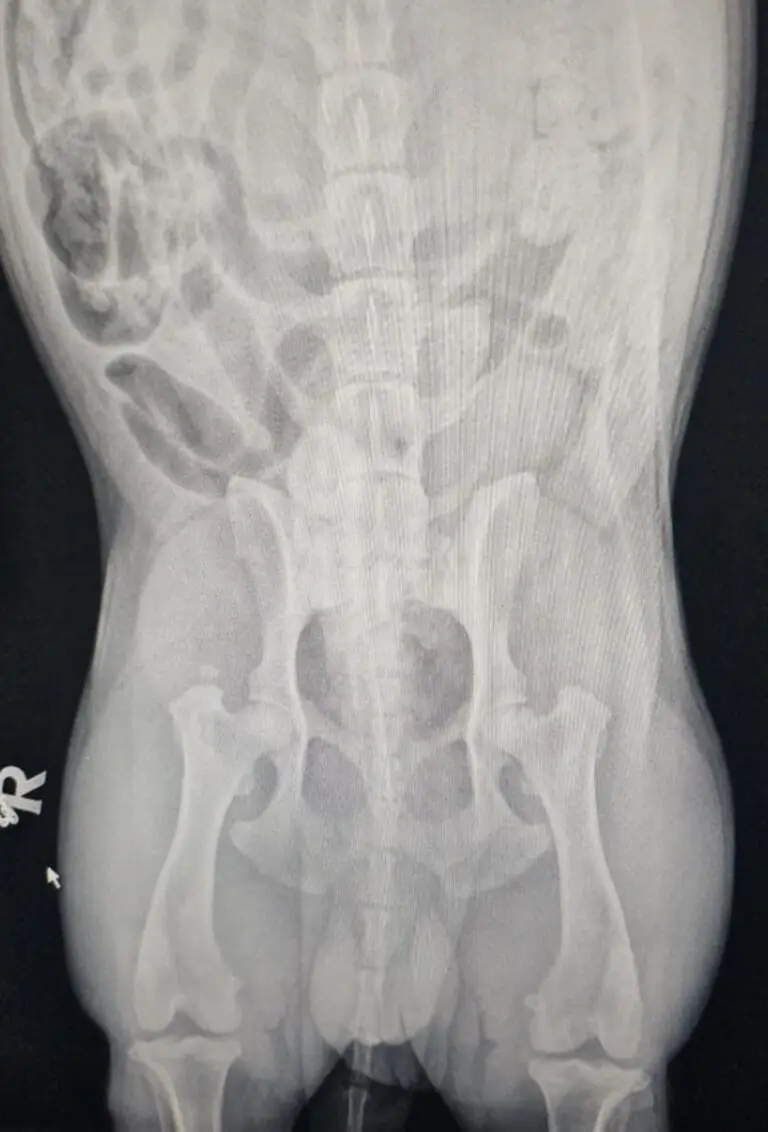
The SSA strongly recommends that breeding stock, dogs and bitches are hip-scored under the KC/BVA Hip Scoring Scheme.
The Sussex Spaniel average hip score is 41. The Vet who does the x-ray of your dog or bitch and submits it to the KC/BVA Scheme may not be aware that the Sussex Spaniel is a Vulnerable British Breed.
If your dog/bitch has a high degree of Hip Dysplasia, then please get further advice from the SSA Health coordinator. It’s important that breed type and temperament is taken into account when breeding plans are made.
Hip scoring can be expensive, but it is a once only event and can be done once the dog is one year old and over. Puppy owners are advised not to over-exercise their puppies in the critical growth stage up to 6 months of age. Puppy food should be well balanced for their requirements, as advised by the Breeder.
Brucellosis in dogs
Brucella canis is a contagious bacterial infection that affects dogs and humans. Currently it is not common in the UK but can be found in imported dogs from countries where the disease is more widespread. Testing is available and may be considered if breeding from an imported dog.
Pyometra in bitches
Pyometra in bitches is a potentially fatal uterine infection that requires urgent surgical removal of the uterus and ovaries to treat. Symptoms include increased thirst, vomiting, lethargy, loss of appetite, and vaginal discharge. It is caused by hormonal changes after a season that create a favourable environment for bacterial growth, primarily E. coli. Early diagnosis and surgical intervention lead to a good prognosis, and pyometra can be entirely prevented by spaying.
Eye testing
The Kennel Club have recently recommended that Sussex Spaniels have their eyes tested under the BVA/KC/International Sheep Dog Society (ISDS) Eye Scheme. The scheme helps screen for inherited eye conditions and assesses overall eye health. A basic eye test is all that is required to assess the structure of the Sussex eye and the eye lids.